
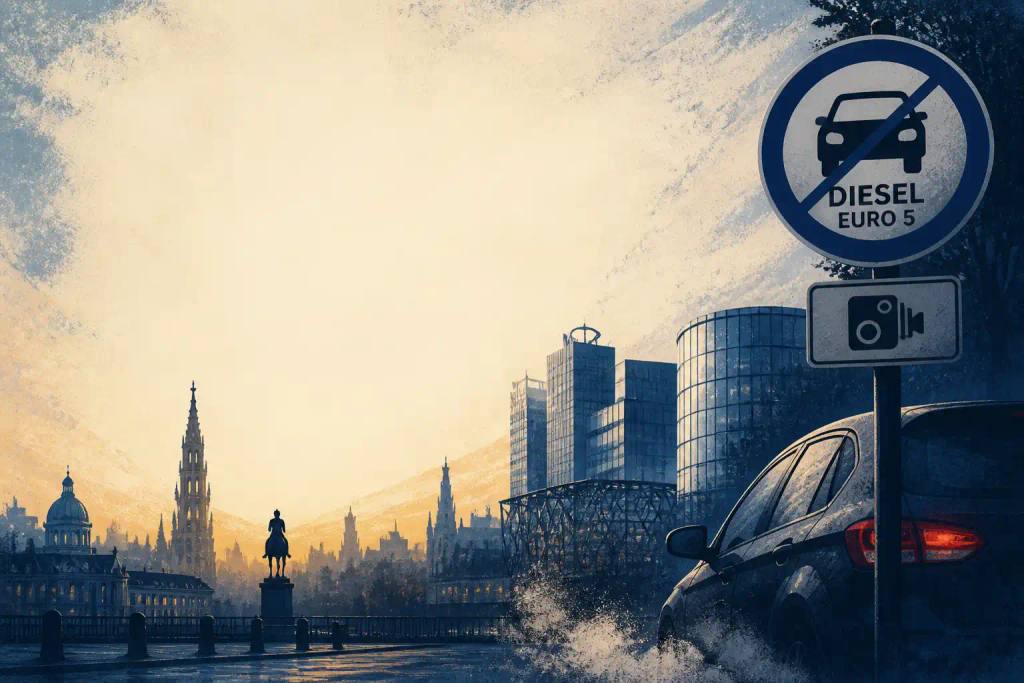
Since July 1, 2026, no less than 1,890 fines have been issued to drivers of Euro 5 diesel cars in the Brussels-Capital Region, where these vehicles are no longer permitted in the Low Emission Zone (LEZ). These figures, published by Bruzz, highlight the intensification of enforcement after a period of warnings.
What is Happening
The ban on Euro 5 diesel cars in the Brussels LEZ came into effect on January 1st of this year. Following a transitional period during which mainly warnings were issued, the city has now moved to effective fining. According to Bruzz, 25,905 warnings were sent before July. These fines follow the stricter policy of the Brussels government aimed at improving air quality in the capital. Euro 2 petrol cars are also prohibited, although the recent enforcement focus is primarily on diesel vehicles.
Background
The introduction of Low Emission Zones is a European trend, driven by the need to reduce harmful emissions and protect public health. In Belgium, the Brussels-Capital Region has played a pioneering role in implementing such zones. The LEZ aims to reduce the concentration of fine particulate matter and nitrogen oxides in the urban environment. The gradual tightening of standards means that increasingly older and more polluting vehicles are disappearing from the road.
The figures regarding fines for Euro 5 diesels in the LEZ were reported by Bruzz in their news coverage. This provides insight into the strict enforcement by Brussels authorities.
Impact of environmental zones on air quality
Measures such as the expansion of the Brussels LEZ and the banning of certain vehicle categories are directly aimed at improving air quality. Studies have shown that Low Emission Zones can have a significant positive effect on reducing air pollution, which benefits the health of residents. This aligns with the broader climate policy of Belgium and the European Union.
What This Means for Belgium
For motorists and residents of the Brussels-Capital Region, this signifies a continuation of stricter mobility policies. Vehicle owners with Euro 5 diesels will need to consider alternatives for their travel in the capital. This could accelerate the shift towards cleaner vehicles, such as electric or newer hybrid models. For businesses, such as transporters or courier services operating in Brussels, these rules may also have financial implications, as fleet adjustments could be necessary. Cities like Antwerp and Ghent also have their own LEZs, confirming the national trend towards cleaner mobility and increasing pressure on consumers and businesses to make environmentally friendly choices.
