
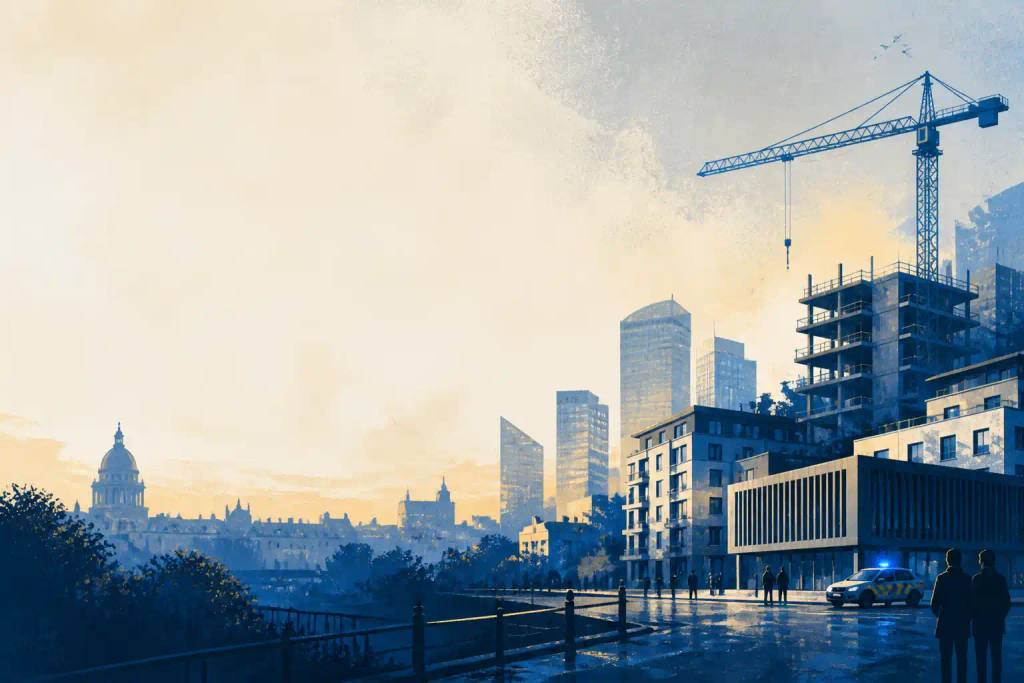
In the Brussels municipality of Forest, an ambitious real estate project is underway, set to significantly transform the urban landscape. According to a recent report by Bruzz, this plan includes the realization of no fewer than 167 new homes, complemented by four commercial spaces and a brand-new police station. The project, located in Skating Street (Schaatsstraat/Rue du Patinage), promises to provide a significant boost to the housing market and local security infrastructure in the region. The arrival of such a large-scale project in a densely populated city like Brussels is a sign of ongoing urban development and the search for solutions to housing shortages and the need for modern public facilities.
What is Happening
This project focuses on the development of Skating Street and surrounding areas in Forest. In addition to the 167 homes, which will vary in size and type to attract a diverse population, four commercial spaces will also be created. These spaces are intended to house local services and shops, which will enhance the vibrancy of the neighborhood and boost the economy. A crucial part of the plans is the new police station, which aims to guarantee the safety and comfort of residents in Forest and its surroundings. The projected completion date is not explicitly mentioned in the initial report, but such large-scale projects typically require several years of planning and execution. It is clear that the municipality of Forest is committed to an integrated approach, where living, working, and security go hand in hand with urban renewal.
Impact on local housing market in Forest
The addition of 167 homes will undoubtedly impact the local housing market in Forest, a municipality that, like the rest of Brussels, faces high demand for affordable and quality housing. The project can meet some of this demand while also increasing the attractiveness of Skating Street as a residential location. It is a strategic move by the municipality to respond to demographic growth and the needs of its residents, both existing and future.
Background
Brussels, as the capital of Belgium and the European Union, constantly faces the challenge of combining sustainable urban development with maintaining livability. Projects like this one in Forest are a direct result of these challenges. Pressure on the housing market is high, and at the same time, there is a constant need for modernization of public infrastructure, including that of the Brussels police. The decision to include a new police station in a mixed-use development project demonstrates a trend towards more compact and multifunctional urban spaces. This aligns with a broader vision of urban planning focused on optimizing available land and creating nearby amenities for residents. Other Brussels municipalities such as Schaerbeek and Anderlecht are also working on similar urban development projects to meet growing demand.
What This Means for Belgium
While this project is specifically focused on Forest and the Brussels agglomeration, it reflects a broader trend in Belgium. Many cities, from Antwerp to Liège, grapple with similar issues concerning urban densification, housing shortages, and the modernization of public services. The approach in Forest, combining homes, commercial spaces, and an essential public building like a police station, can serve as a model for other municipalities in Belgium. It underscores the importance of strategic planning and investments in infrastructure to ensure the livability and safety of urban areas. The collaboration between local government, project developers, and the Brussels South police zone illustrates how complex urban challenges can be addressed multidisciplinarily.
The primary source for this news is Bruzz, which reports on the development of the real estate project in Skating Street, Forest.
