
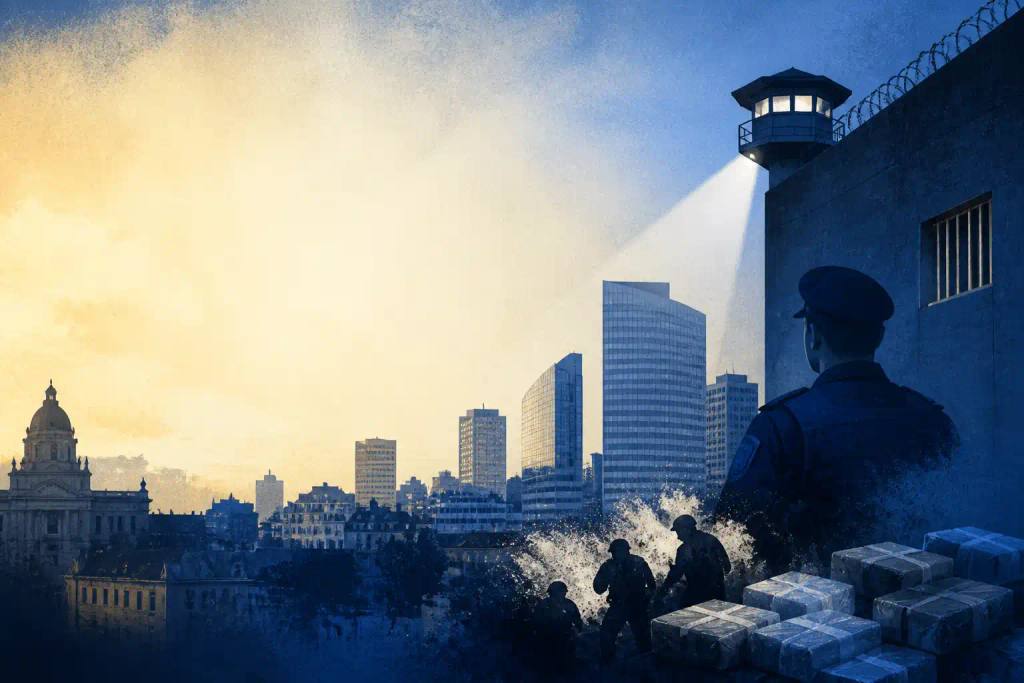
The deployment of police officers from the Brussels-South zone to prisons is facing strong criticism from Brussels mayors. They fear that this decision will come at the expense of the fight against drug crime in their municipalities, which is already under pressure. The mayors of Anderlecht and Saint-Gilles have spoken out on this issue.
What is happening
Recently, police officers, initially assigned to the Brussels-South zone, have been deployed to cover staff shortages in Belgian prisons. This measure often follows strikes or an acute lack of prison guards, putting pressure on security within these institutions. While the need for additional manpower in prisons is acknowledged, the redeployment of police forces is causing concern among local authorities. The mayors of Anderlecht and Saint-Gilles state that their municipalities consequently have less capacity to tackle organized drug crime, a problem that is becoming increasingly urgent in the capital.
Impact on Local Drug Enforcement in Brussels
The reduction of police presence on the streets, even temporarily, can have a significant impact on ongoing operations against drug networks. This is especially true for areas with high crime rates, where a constant police presence is crucial. The mayors argue that the safety of their citizens is indirectly compromised by this policy choice.
Background
The issues surrounding staff shortages and strikes in Belgian prisons are not new. Federal police or even local forces are regularly called upon to ensure the continuity of services in penitentiary institutions. This practice is often seen as an emergency solution, but its frequency is raising increasing concerns. Labor market shortages and high workloads in the prison sector contribute to a structural problem that is not easily resolved. This leads to continuous tension between the different security levels and their respective tasks. The Ministry of Justice is primarily responsible for prisons, while the Ministry of the Interior manages the police.
What this means for Belgium
This situation highlights the need for a coherent national strategy regarding security and justice. The ad hoc deployment of police services for tasks for which they are not primarily trained can lead to a displacement of problems. While order in prisons may be temporarily restored, other security challenges, such as drug trafficking in urban areas, may worsen. For the Belgian population, this could mean a diminished sense of security in their immediate living environment, as the country grapples with complex societal issues. The discussion on the funding and staffing of both the police and prisons is expected to remain high on the agenda, particularly in political Brussels. Citizens in Antwerp and Liège are also closely watching the decisions made in the capital.
The mayors of Anderlecht and Saint-Gilles are unhappy about the deployment of police officers from the Brussels-South zone to manage the prison strikes, according to Bruzz.
