
What's Happening
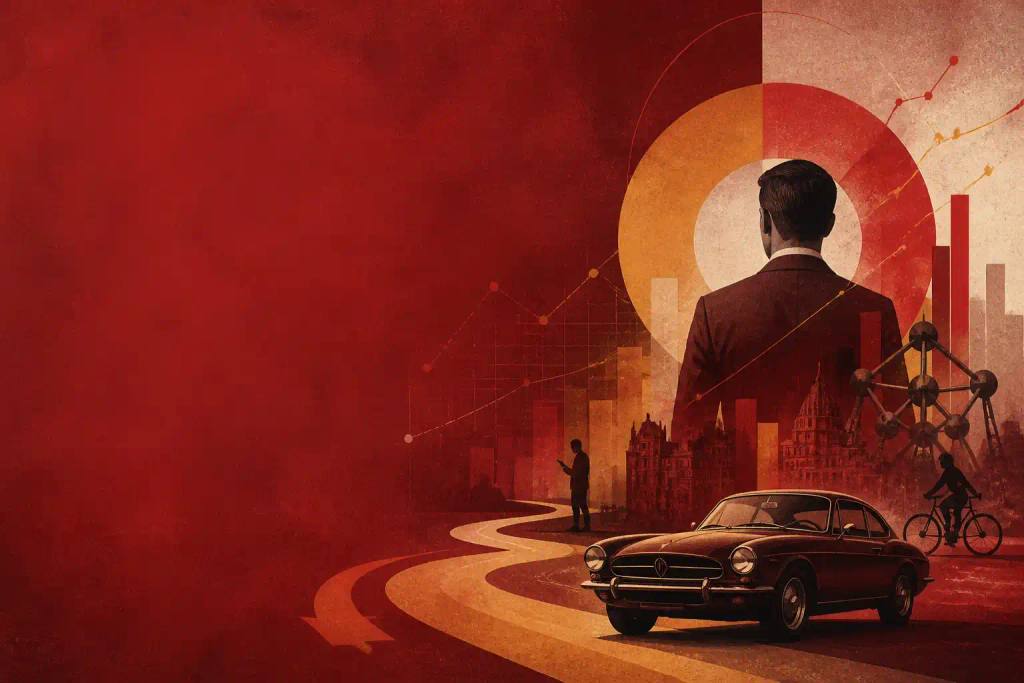
D'Ieteren, the leading Belgian mobility group, is at the forefront of a significant transformation within the automotive sector. The company acknowledges the emergence of a new approach to mobility consumption, which necessitates a fundamental rethinking of its traditional automotive activities. This process is aptly described as the end of the 'dad's car,' a metaphor for the traditional vehicle ownership model that has dominated for decades. This move is a direct response to evolving consumer needs and the broader societal shift towards more sustainable and flexible mobility solutions. The announcement, made via an editorial in L'Echo, indicates a proactive stance by D'Ieteren to remain relevant in a rapidly changing market.
Impact on Traditional Car Ownership
The term 'dad's car' refers to the classic model where a household typically owns one or more vehicles for private use. This approach is under pressure due to factors such as rising costs, environmental consciousness, and the rise of the sharing economy. D'Ieteren anticipates this by exploring alternatives such as car-sharing programs, subscriptions, and multimodal transport solutions that reduce the need for full ownership.
Background
For some time, there has been a growing discussion about the future of mobility, particularly in urban areas such as Brussels and Antwerp. Governments, like the Flemish Government and the Brussels-Capital Region, are actively encouraging the use of alternative modes of transport and seeking to reduce traffic congestion. These policy choices, combined with technological innovations, create fertile ground for new mobility concepts. The shift in consumer behavior, where convenience and flexibility are becoming more important than possession, compels established players like D'Ieteren to transform. Companies such as D'Ieteren, with a long history in the sale and distribution of cars from brands like Volkswagen and Audi in Belgium, must reposition themselves to meet these new demands. It is no longer just about selling vehicles, but about offering a complete ecosystem of mobility services.
What This Means for Belgium
For Belgium, D'Ieteren's strategy signifies an acceleration of the transition towards a more integrated and sustainable mobility landscape. As one of the largest private employers and a key player in the Belgian economy, the direction D'Ieteren takes can have a significant ripple effect on other companies and sectors. It will stimulate competition to develop and offer innovative mobility solutions. This could lead to more choice and flexibility for Belgian consumers, but also presents challenges for traditional car dealerships and service providers who must adapt to the new reality. The focus will shift from pure car ownership to a broader spectrum of 'mobility as a service,' which will impact infrastructure planning, urban development, and the job market in Belgium.