
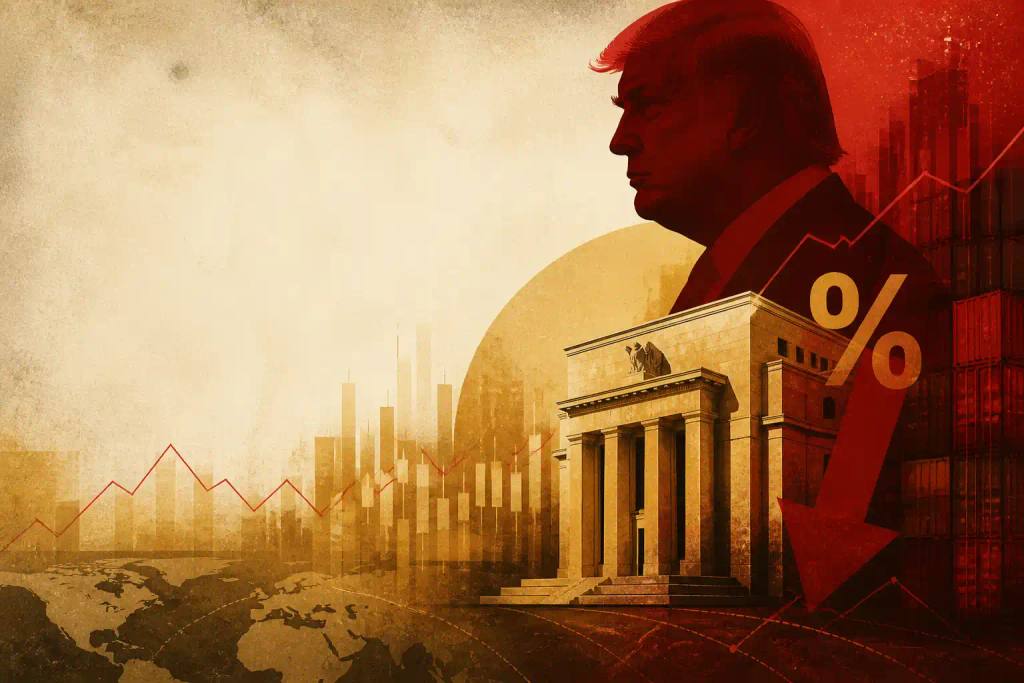
President Donald Trump has once again significantly increased pressure on the Federal Reserve, the U.S. central bank, with an explicit demand for an interest rate cut. This call, widely publicized, comes at a time when international economic stability is already under strain. Trump's statements have potentially far-reaching consequences, not only for the United States but also for its trading partners, including Belgium.
What's Happening
President Donald Trump has publicly urged for a significant interest rate reduction by the Federal Reserve. He has issued a clear warning: if the central bank does not intervene, he is considering halting trade with certain partners. This is an unusual step for a president to so directly influence the independence of the central bank, and it demonstrates Trump's determination to stimulate the American economy, even with aggressive measures. Global financial markets are closely monitoring these developments, given the potential volatility that could arise. The Federal Reserve's response to this pressure is yet to be seen, but tensions have clearly escalated.
Background
The relationship between President Trump and the Federal Reserve has been strained for some time. Trump has repeatedly criticized the Fed, often via social media, believing that interest rates are too high and hinder economic growth. The Federal Reserve, on the other hand, led by Jerome Powell, emphasizes its independence and makes monetary policy decisions based on economic indicators such as inflation and employment. However, Trump's current pressure is of a different magnitude, as he is now directly threatening trade sanctions if his demands are not met. This could set a precedent for political interference in monetary policy.
Trade Policy Implications for European Countries
The threat of trade sanctions is a worrying development for countries with strong export-oriented economies, such as Belgium and other EU member states. A disruption of global trade could lead to a decrease in exports and a negative impact on Belgian employment and growth. Trade relations with the United States are of crucial importance to our country, and any escalation of trade conflicts could severely affect the Port of Antwerp and numerous companies active in international trade. The European Commission and individual countries will closely monitor these developments.
What This Means for Belgium
President Trump's escalating pressure on the Federal Reserve and the associated threat of trade sanctions could have significant consequences for Belgium. If the United States tightens its trade policy, it could affect the export of Belgian goods and services. This impacts not only large multinational corporations but also the numerous small and medium-sized enterprises (SMEs) that depend on international trade. The Belgian government, in cooperation with the European Union, may need to develop strategies to mitigate the economic impact and protect the interests of Belgian businesses. This article is based on reporting from De Tijd, which extensively covers American politics and economics.