
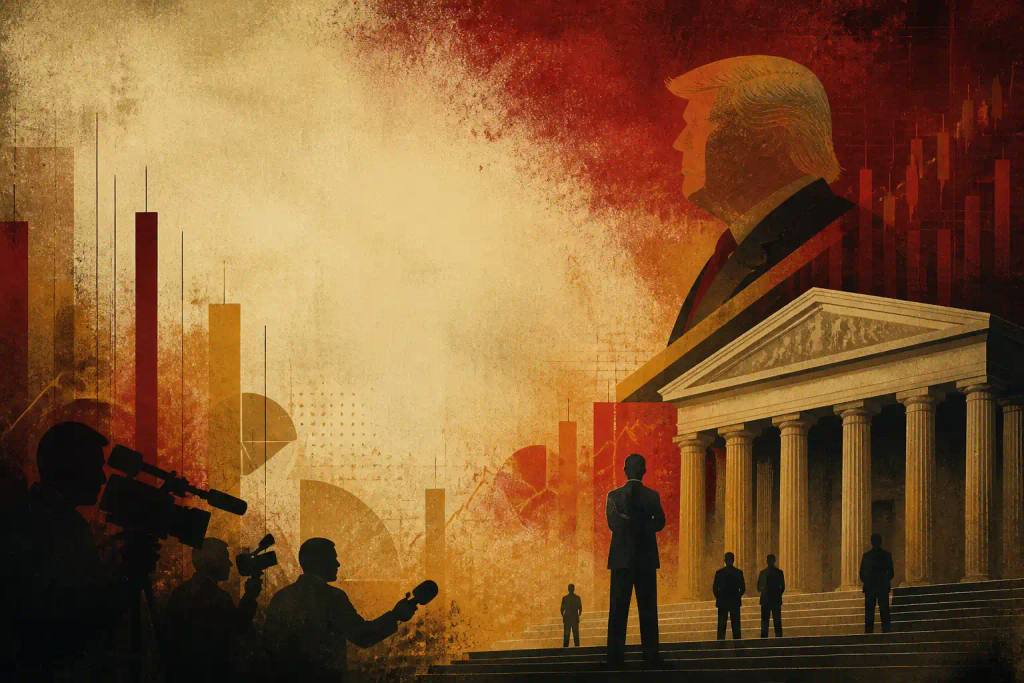
The U.S. Department of Justice has sided with former President Donald Trump in a lawsuit concerning his authority to deny media organizations access to the White House. In a brief filed with the court, it is argued that the president has the right to deny journalists access to protect national security, a stance that challenges broad press freedoms. This support for Trump marks a significant development.
What is Happening
The U.S. Department of Justice this week submitted a statement to a federal court, defending Donald Trump's legal position. The case revolves around the president's authority to deny certain media outlets, particularly critical ones, access to White House events and press briefings. This action by the Justice Department is seen as a significant victory for Trump, who frequently clashed with established media during his presidency. The administration argues that access to the White House press area is a privilege, not a right, and that the president has discretionary power to regulate this access, especially when national security interests are at stake. This issue is expected to escalate further and could potentially set a precedent for future presidencies in the United States.
Background
The relationship between the U.S. president and the press has been strained for some time, but it reached a low point during Donald Trump's term. He labeled various news outlets as 'fake news' and 'enemies of the people.' Several incidents, such as the revocation of a CNN journalist's press accreditation, led to legal proceedings. Press organizations, including the White House Correspondents' Association, have sharply criticized Trump's restrictions and rhetoric, emphasizing the importance of a free and independent press in a democracy. Belgian media outlets, such as VRT NWS and De Standaard, are closely monitoring these developments, given the implications for press freedom worldwide. The current legal battle reflects a fundamental tension between presidential powers and the role of the fourth estate.
The broader implications for press freedom
The debate over press freedom and the president's role in regulating media access touches on the core of democratic principles. International organizations and European institutions, such as the European Parliament, have consistently emphasized the importance of an unhindered press. This policy could influence how media in Belgium and Europe experience access to political leaders and institutions. The outcome of this case could lead to new debates about the limits of press freedom and the definition of 'national security' in relation to journalistic reporting.
What This Means for Belgium
Although the case is taking place in the United States, its outcome has broad implications for press freedom and journalism worldwide, including in Belgium. Belgian media organizations, like L'Echo and Het Laatste Nieuws, are closely following such developments. A precedent that expands a government's ability to bar journalists could open the door for similar practices in other countries, potentially complicating Belgian journalists' access to international news sources and events. The discussion about 'national security' as a reason for press discrimination could also raise questions in a Belgian context about government transparency and openness. It is crucial for a democracy that the press can report unhindered, even on critical topics, to properly inform citizens. Belgian professional associations for journalists will likely follow these developments with great concern.
The primary source for this news is L'Echo, which reported on the U.S. Department of Justice's support for Donald Trump in his media dispute.