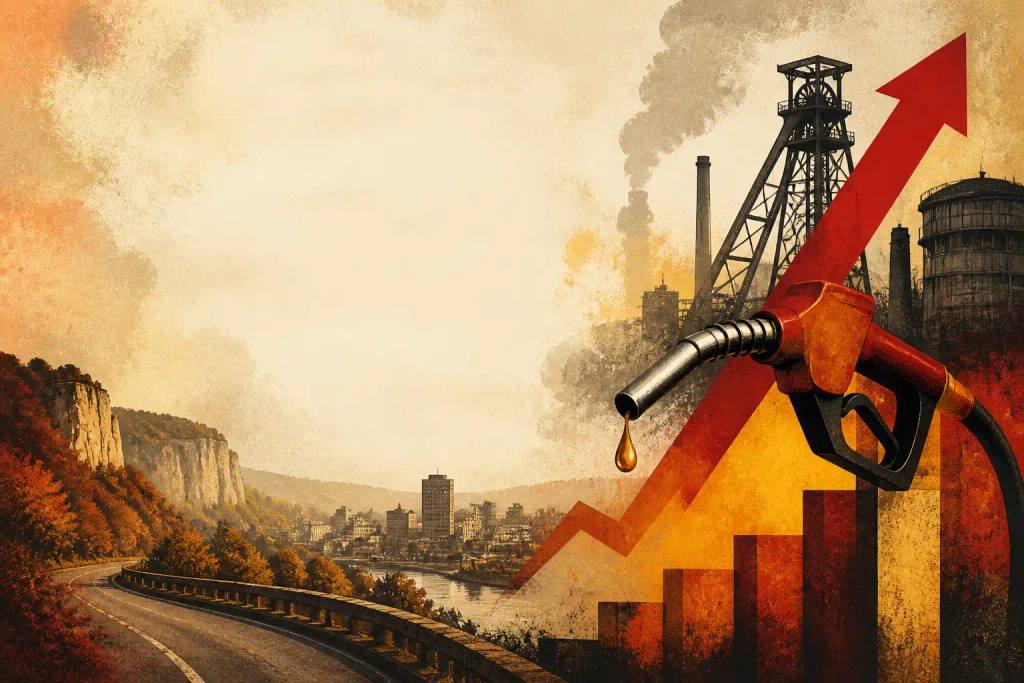
The petrol price in Belgium is set to rise again on Thursday, exceeding the 2 euro per liter mark. This significant increase, which marks the highest level since July 2022, will be felt by millions of motorists across the country. The official maximum price for petrol 95 will increase by 9.2 cents to 2.058 euros per liter, a development that further squeezes the cost of living.
What is Happening
Effective Thursday, the maximum price for a liter of petrol 95 will be 2.058 euros, representing a direct upward adjustment of 9.2 cents. For Belgian households and businesses dependent on road transport, this increase means higher operating costs. Daily commuters and logistics sectors will directly experience the impact of this price shock, especially given existing inflationary pressures. The federal government monitors the situation, but fuel prices are largely tied to international oil rates.
Background
Volatility in international oil markets is a crucial factor influencing fuel prices in Belgium. Geopolitical tensions, production cuts by major oil-producing countries, and fluctuating demand all contribute to unpredictable swings. The last time the price of petrol 95 reached a similar level was in July 2022, a period also characterized by global uncertainty. Belgian energy prices, including those for petrol, are adjusted weekly based on these market movements. These adjustments are communicated via the FPS Economy as part of transparency in the fuel sector.
Impact of International Oil Prices on Belgian Consumers
The Belgian fuel market is highly dependent on international quotations for refined petroleum products. This means that consumers at the pump directly experience the consequences of events far beyond our borders, such as disruptions in the supply chain or decisions by OPEC+ countries. Belgian gas stations and their customers are thus directly confronted with price fluctuations they cannot influence.
What This Means for Belgium
This increase in fuel prices has broad implications for the Belgian economy. Higher transport costs can lead to an increase in the prices of goods and services, potentially further fueling inflation. This affects the purchasing power of the Belgian population, putting additional pressure on limited-budget households. Organizations such as Touring and VAB have previously warned about the consequences of such price increases on mobility and daily life. The government will face the challenge of mitigating the impact, possibly through targeted support measures, although a structural solution to dependence on fossil fuels is a long-term project. Belgium, with its central location in Europe, is particularly sensitive to fuel prices, as this affects the entire logistics chain.
The rise in petrol prices was reported by L'Echo, indicating that the maximum price for petrol 95 will increase to 2.058 euros per liter, a record since July 2022.