
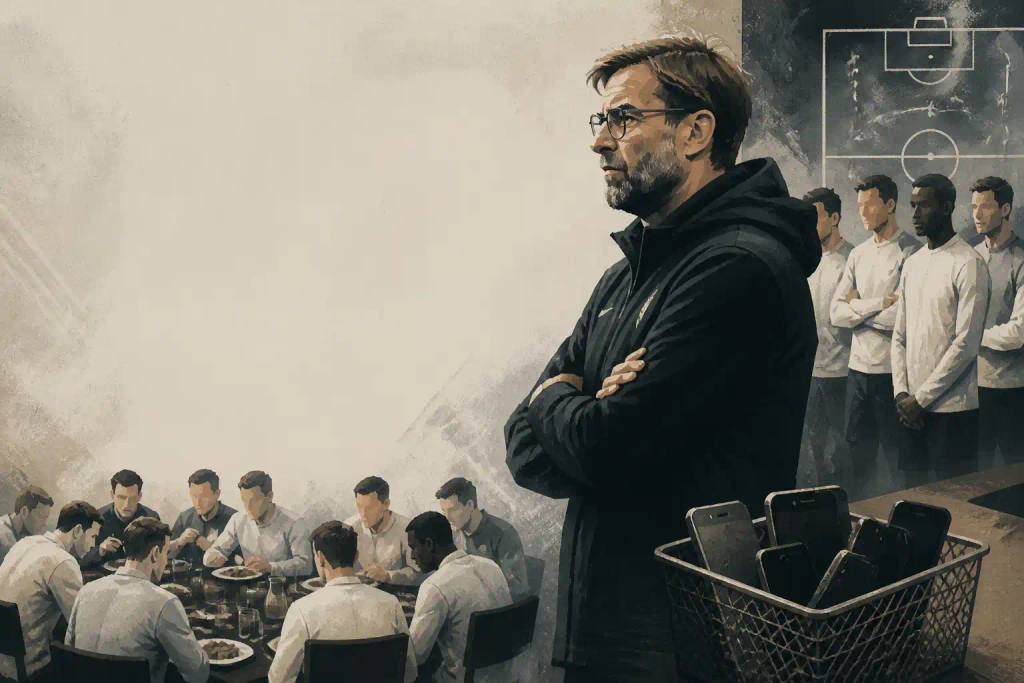
Jürgen Klopp has officially been appointed as the new head coach of the German national football team, famously known as Die Mannschaft. His arrival marks a new era for the team, with the clear ambition of becoming European champions by 2028. Klopp is renowned for his intense and demanding approach, and this is once again evident in the immediate measures he has implemented. The former Liverpool coach has, among other things, banned mobile phone use in rooms and insists that everyone sits down to eat together, a sign of his pursuit of a cohesive and disciplined group.
What is Happening
Jürgen Klopp (59) returns to the international football stage after a period of absence, and he is wasting no time. His first match as coach of Die Mannschaft is a prestigious confrontation with the Netherlands. Klopp has a clear vision: discipline, unity, and unwavering focus. This translates into unusual, yet typical, rules for him. Players must leave their mobile phones in their rooms, and external hairdresser visits are no longer allowed within the team bubble. He has not come to make friends, but to create a 'monster,' as he describes it himself—a team that must be unbeatable. Expectations are high, both from the German Football Association (DFB) and millions of fans. The pressure on Klopp to deliver results quickly is considerable, especially with an eye on the upcoming European Championship in 2028.
Klopp's impact on team building
The emphasis on communal meals and the ban on personal mobile phone use during team activities are characteristic of Klopp's team-building philosophy. He believes that personal interaction and shared experiences are essential for forging a cohesive team. He successfully applied this approach at Borussia Dortmund and Liverpool, where he transformed teams into winning machines. Die Mannschaft players will have to adapt to this new, strict culture, but the promise of potential success is a powerful motivator.
Background
Klopp's reputation as a top coach is undisputed. His past successes, including winning the UEFA Champions League and the English Premier League with Liverpool, speak for themselves. After two years of 'paid leave,' as Hln.be puts it, at a Red Bull resort, he returns with renewed energy and determination. The German national team has struggled with inconsistency and disappointing performances in major tournaments in recent years, leading to the search for a strong leader. Klopp's charisma, tactical acumen, and ability to motivate players make him the ideal candidate to get Die Mannschaft back on track. The DFB hopes that his appointment will provide the much-needed impetus to restore the national team to the world's elite.
What This Means for Belgium
The arrival of Jürgen Klopp as Germany's national coach also has implications for Belgium, both athletically and socially. Germany is one of Belgium's neighboring countries and a regular competitor in international tournaments. A strengthened Die Mannschaft under Klopp's leadership could pose an additional challenge for the Red Devils in future competitions, such as qualifications for the World Cup or European Championship. The Royal Belgian Football Association (RBFA) and national coach Domenico Tedesco will closely monitor developments in our eastern neighbors. Moreover, Belgian football fans and media outlets, such as the VRT and Sporza, will follow the performances of Klopp and his team with great interest, given his status as one of the most influential coaches in modern football. The impact of a strong German team can significantly influence the dynamics of the European football landscape.
